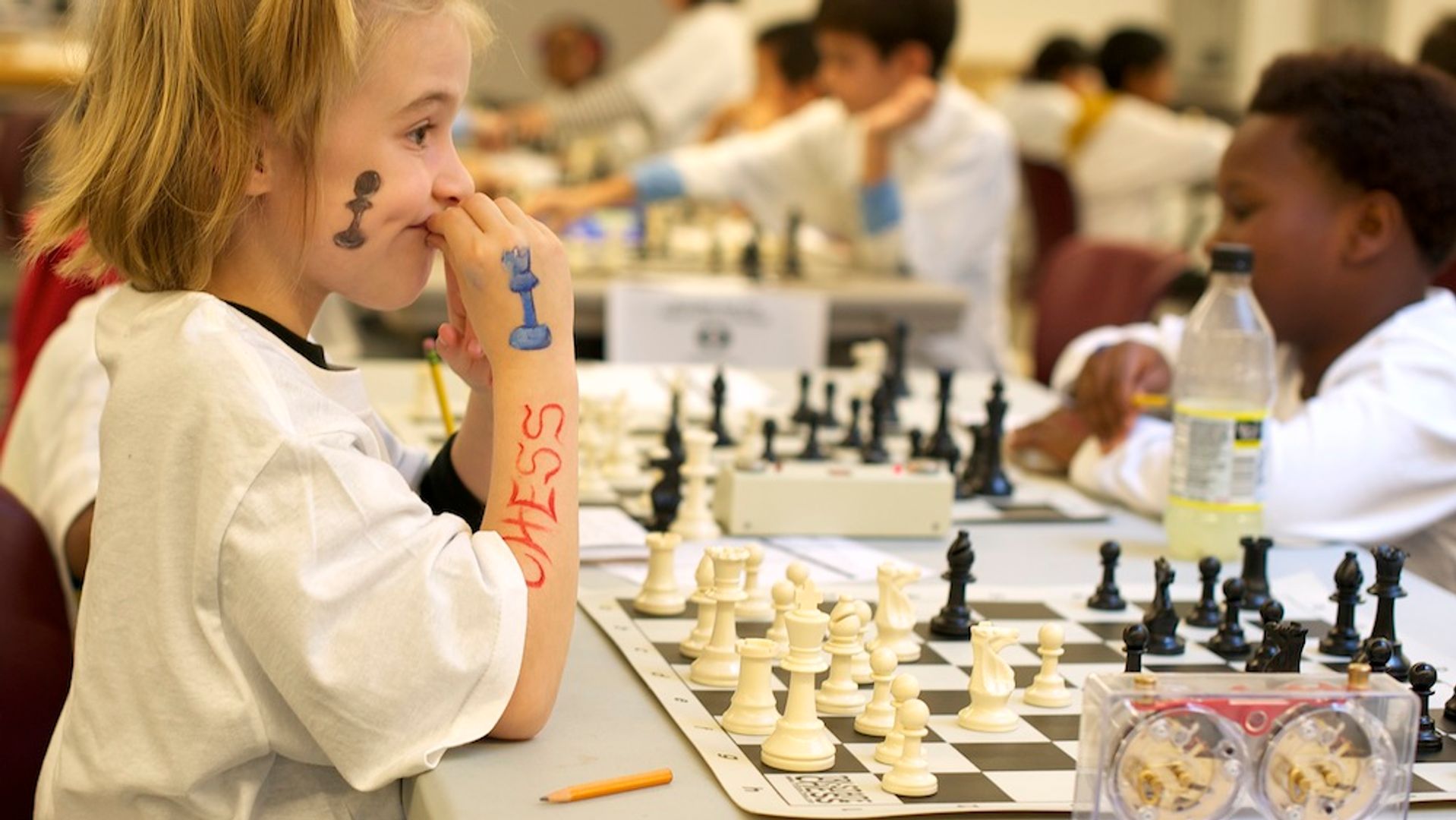
Many parents ask this question before enrolling their child in chess classes:
Is chess actually good for children’s brain development?
The short answer is yes.
Not because it instantly makes children more intelligent, but because of the thinking habits it builds over time.
Chess for children strengthens focus, encourages structured thinking, and teaches decision-making in a practical way. Children can begin learning the basics of chess as early as three years old, when taught in an age-appropriate and engaging manner.
Chess Strengthens Focus and Concentration
In a world full of constant distractions, one of the biggest benefits of chess for kids is improved concentration.
During a game, a child must:
• pay attention to the entire board
• think before moving
• remember previous moves
• stay mentally present
This trains sustained focus in a natural and engaging way.
Many parents notice that children who attend regular kids chess lessons begin to show better concentration in school as well.
Chess Develops Problem-Solving Skills
Chess is essentially a series of problems.
Every move asks a question:
What is the threat?
What is the plan?
What is the best solution here?
Over time, chess for children builds structured problem-solving. Instead of reacting impulsively, children learn to pause, assess the situation, and choose the most logical option.
This skill carries far beyond the chess board.
Chess Improves Decision-Making
Every move in chess is a decision.
Children quickly learn that actions have consequences. If they move carelessly, they may lose material. If they think carefully, they improve their position.
This strengthens responsibility and judgement. Structured chess classes for kids often focus on this process rather than simply winning games.
Chess Builds Emotional Resilience
One of the most valuable benefits of chess for kids is learning how to handle losing.
In chess, there are no teammates to blame and no luck involved. Children must take responsibility for their decisions.
Over time, this teaches:
• patience
• self-control
• resilience after mistakes
• emotional recovery
Children who participate in chess lessons gradually understand that losing is part of learning, not a personal failure.
Memory and Pattern Recognition
Chess trains pattern recognition. Children begin to recognise tactical themes, common checkmates, and strategic structures.
This strengthens working memory and visual processing skills.
Whether through in-person chess classes for kids or online chess lessons for kids, repeated exposure to patterns improves mental organisation and confidence.
Final Thought
Chess does not replace school learning. It supports it.
Through regular practice, chess for children develops focus, discipline, critical thinking, and emotional balance- skills that benefit them both academically and socially.
That is why chess for kids continues to grow in popularity worldwide.