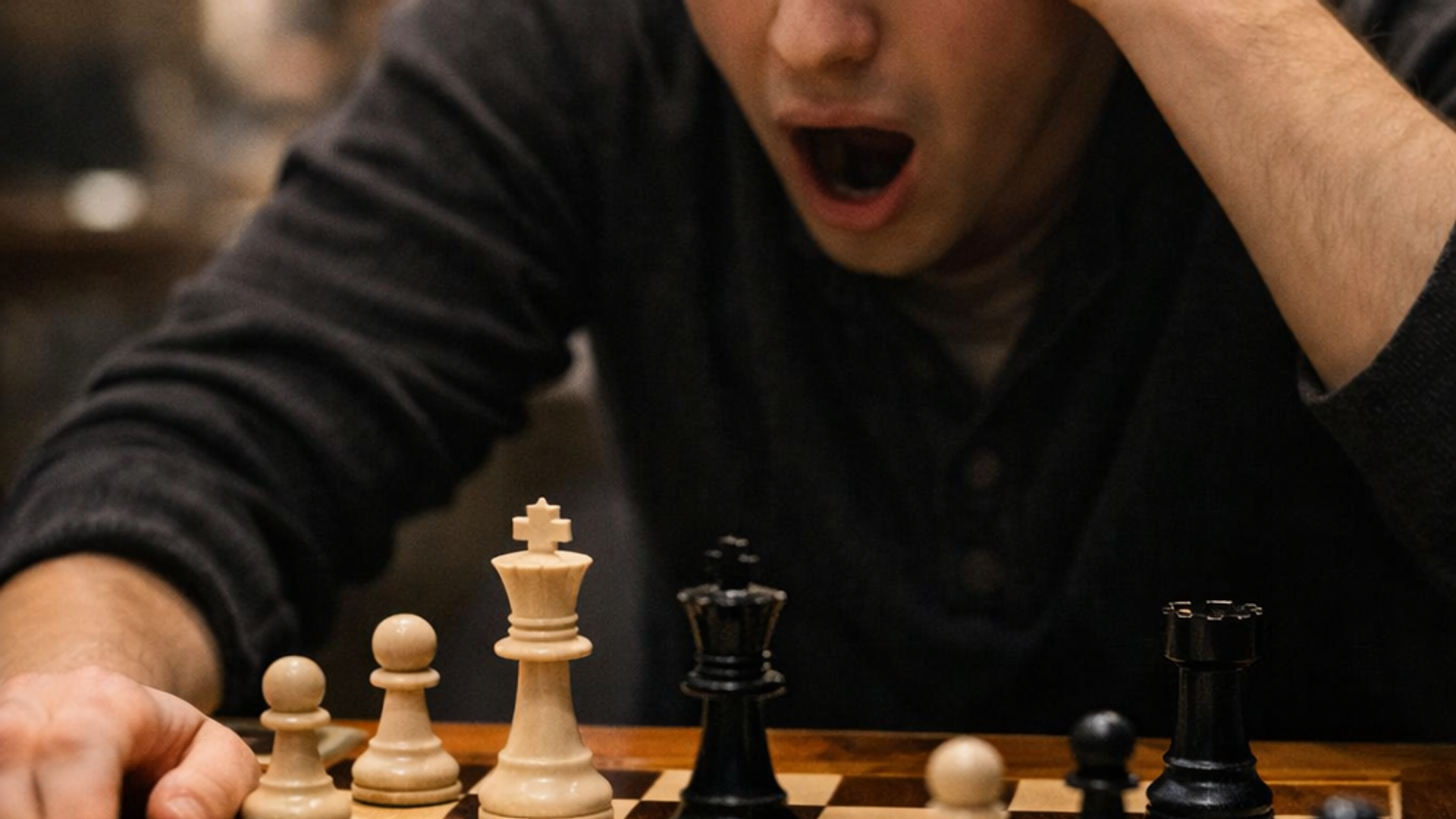
Blunders happen at every level.
Beginners blunder pieces.
Club players blunder tactics.
Even grandmasters occasionally make shocking mistakes.
So why does it happen?
Chess blunders are rarely just about not seeing a move. Most of the time, they are about attention, psychology, and decision-making.
1. We Stop Checking the Basics
Many mistakes happen because a player assumes something instead of verifying it.
They assume a piece is protected.
They assume a tactic does not work.
They assume the opponent does not have a threat.
In chess, assumptions are dangerous. Strong players develop the habit of double-checking simple things before making a move.
2. Emotional Reactions
A very common cause of blunders is emotional imbalance.
After making a small mistake, some players become frustrated and rush.
After gaining an advantage, others become overconfident and careless.
The first mistake often is not the reason a game is lost. The emotional reaction to it is.
3. Time Pressure
Poor time management creates panic.
When the clock is low, players stop thinking clearly. They switch from structured evaluation to survival mode.
Learning how to manage time properly is just as important as learning tactics.
4. Looking Too Deep Instead of Looking Clearly
Some players try to calculate long variations while missing simple moves.
They search for something brilliant when a normal improving move is enough.
In many cases, the best move is not spectacular. It is practical.
5. Ignoring the Opponent
One of the biggest causes of blunders is focusing only on your own ideas.
Every move should begin with one simple question:
What is my opponent threatening?
Many blunders disappear when this habit becomes automatic.
Final Thought
Blunders are part of chess.
They are not proof of low intelligence. They are proof that chess demands discipline, emotional control, and consistent attention.
The goal is not to eliminate mistakes completely.
The goal is to reduce unnecessary ones.