One of my most dedicated students once asked me a question that stayed with me.
“How can I play tennis for twelve hours, but feel completely exhausted after forty-five minutes of chess?”
For many people, pushing their limits physically feels easier than pushing them mentally. Not because physical effort is objectively easier, but because it is more familiar. Many people grow up using their bodies daily in active ways, but they rarely train their minds with the same intensity or structure.
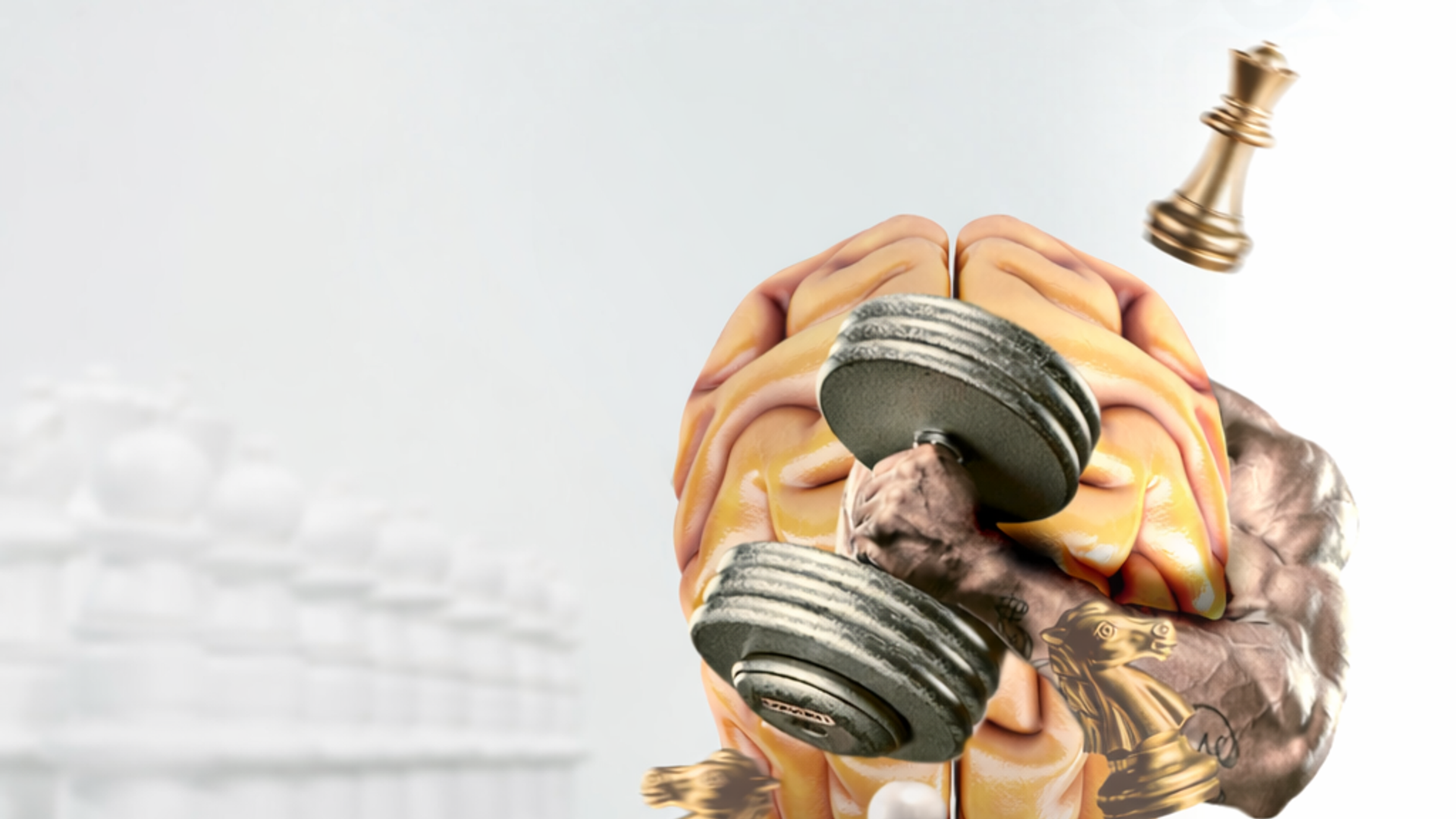
I told my student something simple: the brain is a muscle. If you are used to physical exercise, physical endurance will feel natural. Mental endurance, on the other hand, may feel foreign, even overwhelming.
She laughed and said, “I’m a complete beginner in the mental gym.”
And she was right.
Stamina, whether physical or mental, relies on two elements. The first is raw capacity: strength, fitness, or cognitive ability. The second is focus: the ability to stay present without quitting.
In the gym, you are asked to quiet your mind and focus on movement. The challenge is physical.
Chess works differently.
To play chess well, you must shut down external noise while actively generating new thoughts at the same time. You are not emptying the mind. You are replacing it. Every position demands calculation, imagination, evaluation, and decision-making. With every move, new thoughts arise. With every distraction, you must bring your focus back again.
Making good decisions in chess requires independent thinking under constant mental pressure. If a random thought enters your mind, you cannot ignore it passively. You must actively dismiss it and re-enter the position. Over and over again.
For some people, chess can be more mentally demanding than physical exercise. In the gym, you shut thoughts down. In chess, you shut thoughts down and build new ones simultaneously.
Interestingly, my experience was the opposite of my student’s.
For many years, I struggled in the gym. Shutting my thoughts down completely and focusing only on bodily sensations felt unfamiliar and uncomfortable. In chess, my mind is always active. Daily life thoughts are replaced by positional decisions. Emotional noise is replaced by calculation. For someone used to thinking constantly, chess feels natural. Silence does not.
For my student, the constant thinking felt exhausting. For me, the absence of thinking felt almost impossible.
Yet we shared something important.
We both had mental muscles that were underdeveloped. Mine was the ability to fully quiet the mind and focus on the body. Hers was the ability to sustain active, structured thinking for long periods without mental fatigue.
The brain does not have a single muscle. It has many.
Our job is not to strengthen only what feels comfortable, but to stretch what feels difficult. That is how we stay mentally healthy.
Chess develops cognitive muscles most people underestimate. It trains focus, discipline, emotional control, decision-making, and endurance. It teaches us how to think clearly under pressure, and how to stay present without escaping.
In that sense, chess is not just thinking.
It is thinking without distraction.